Calories refer to the estimated energy burned during daily activities. Your phone and watch track your steps, exercise type, exercise intensity, and duration to estimate calories burned. This helps you manage your health and monitor your daily exercise.
Calorie burn varies by person and mainly depends on body weight, exercise intensity, and duration. For a healthy adult weighing 60 kg, when exercise intensity reaches a "moderately hard" level, the estimated calorie burn for 30 minutes is about 330 kcal for jumping rope, 270 kcal for running, 240 kcal for breaststroke swimming, or 200 kcal for aerobic exercise.
Unit: kcal.
Fat-burning calories
Fat-burning calories refer to the total energy burned from body fat during this activity.
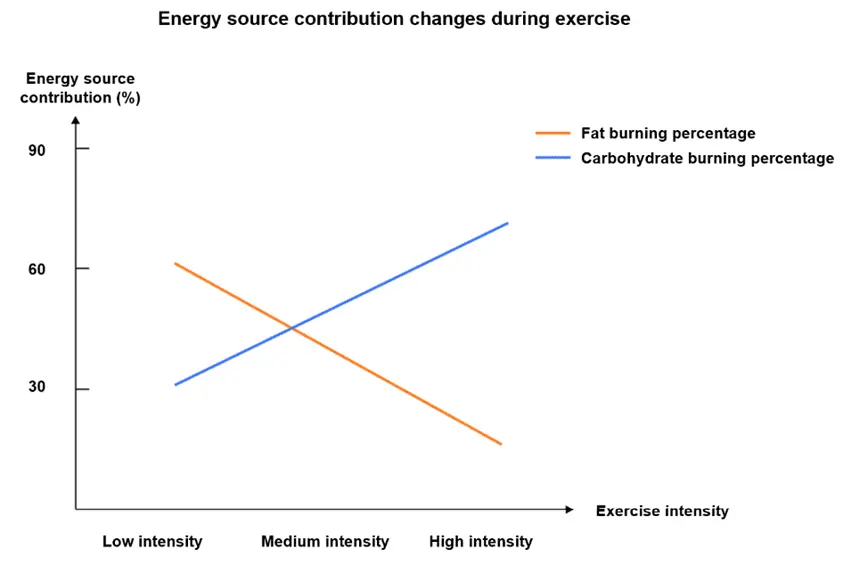
In daily exercise, your body mainly relies on fat and glycogen as energy sources. When you exercise at a low intensity, your body mainly burns fat for energy. As you increase the intensity, it gradually relies less on fat and more on carbohydrates.
Fat-burning effect
Fat-burning effect is rated on four levels: Requires improvement, Fair, Excellent, and Pro. A higher rating indicates better fat utilization during exercise, contributing more effectively to reducing body fat percentage. The rating is related to parameters such as exercise duration, total calories burned, fat-burning calories, and percentage of calories burned from fat.
Fat and carbohydrates are the two main energy sources during exercise. When you exercise at a low intensity, your body mainly burns fat for energy. As you increase the intensity, it gradually relies less on fat and more on carbohydrates. For example, walking burns a higher percentage of fat than jogging, and jogging burns a higher percentage of fat than running.
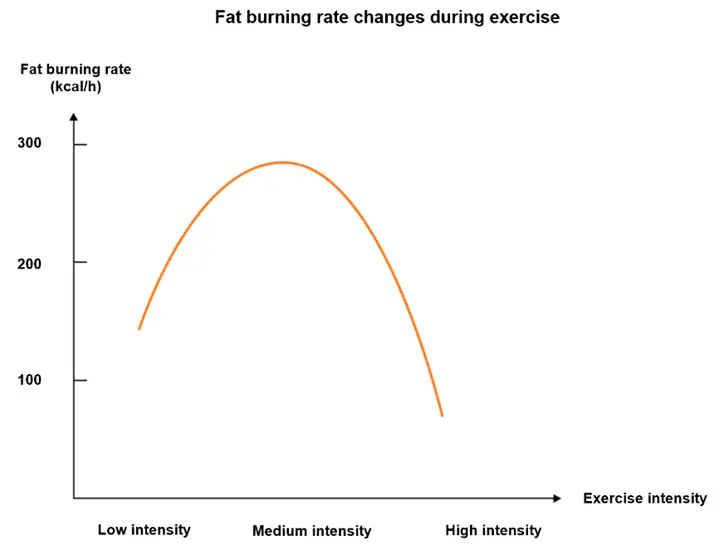
However, total calorie burn during walking is low, so fat-burning calories are limited. As exercise intensity increases, fat-burning calories also increase. Studies show that the fat-burning rate first increases and then decreases with the increase of exercise intensity, presenting an "inverted U-shaped" trend. The heart rate associated with the peak fat-burning segment of the curve is known as the "efficient fat-burning heart rate" during exercise. The longer you spend within the "efficient fat-burning heart rate" range, the higher your average fat-burning rate, resulting in more effective fat loss. Maintain your heart rate within the range for at least 30 minutes during exercise (such as running). Adjusting exercise intensity during exercise helps achieve optimal fat-burning results.
Fat-burning calorie percentage
It refers to the percentage of fat-burning calories to total calories in a single exercise.
Real-time fat-burning percentage
The watch can display the real-time fat-burning percentage during exercise (such as running). By adjusting exercise intensity, you can maintain a high fat-burning percentage to achieve more efficient fat burning.
Efficient fat-burning duration
It refers to the total duration when your heart rate stays within the recommended range during exercise (such as running).
During exercise, the fat-burning rate first increases and then decreases with the increase of exercise intensity, presenting an "inverted U-shaped" trend. Time spent near the peak intensity corresponds to the most efficient fat-burning period, referred to as the efficient fat-burning duration.
Fat-burning rate
It refers to the calories burned from fat per hour during exercise.
Example: If you run for 1 hour and burn 500 kcal in total, with 200 kcal from fat, your average fat-burning rate is 200 kcal/h.
Unit: kcal/h.
Fat-burning HR (running)
It refers to the heart rate zone most suitable for fat burning while running.
The system calculates this zone based on your personal information and continuous heart rate data. After wearing the watch for 7 days, you can unlock a personalized fat-burning heart rate zone for running without extra exercise tests. The range updates monthly according to changes in your fitness level, making fat burning more efficient and easier.